
Period & Older Home Painting Pakenham
Older homes often have painted surfaces with many years of wear, repairs and previous coatings. Period and older home painting considers these existing finishes before new paint is discussed, rather than treating every room or surface like a new build.
For homeowners wanting to refresh an established property, the priority may be improving appearance while keeping distinctive trims, colours and architectural details in mind.
For older homes in Pakenham and suitable parts of Melbourne, Pakenham Premier Painters considers existing surface conditions, access and any specialist checks needed before a painting scope can be agreed.

Why Choose Pakenham Premier Painters for Older Homes?
Painting an older property calls for more than choosing a fresh colour. Different rooms and surfaces may carry contrasting layers, previous repairs or signs of deterioration that affect whether straightforward repainting is appropriate.
When discussing a period home, Pakenham Premier Painters can help establish what the owner wants retained, which surfaces are included and what condition information is available. That makes the proposed painting scope easier to understand.
Where a coating or building material raises concerns, further assessment may be necessary before preparation is considered. Clear boundaries matter: repainting does not automatically include heritage conservation or hazardous-material treatment.
Questions About Older Home Painting
Find practical answers about older coatings, decorative features, specialist checks, heritage considerations and making a suitable painting enquiry.
Does Old House Paint Need Testing?
Older homes can contain layers of lead-based paint, particularly where original coatings have been covered by newer finishes. If lead is suspected, testing or specialist assessment may be necessary before disturbing the surface. WorkSafe Victoria provides guidance on identifying and managing these risks. Ordinary repainting should not be mistaken for hazardous paint removal.
Can You Repaint Original Timber Trims?
Original timber trims may be suitable for repainting, depending on their condition, existing coatings and any deterioration. Decorative profiles, previously painted joinery and surrounding finishes should be considered when defining the scope. Period home painting does not automatically include repairing damaged timber, reproducing missing ornamentation or specialist conservation work.
What If Older Walls Have Asbestos?
Some older properties contain asbestos-containing building materials that may be affected by painting preparation. Suspected materials should not be sanded, scraped or otherwise disturbed without appropriate professional advice. A qualified assessment may be needed before deciding whether painting can proceed. Asbestos identification, removal and remediation are not included in the confirmed painting scope.
Will Heritage Controls Affect Painting Choices?
Potentially. Some Victorian properties are subject to heritage controls that affect exterior painting, alterations or previously unpainted surfaces. Requirements depend on the property's particular protections. Owners should check with the relevant council or heritage authority before committing to changes. Older home repainting should not be confused with specialist heritage restoration.
Must Existing Paint Be Completely Removed?
Not necessarily. Whether older paint can remain depends on its condition, compatibility with the proposed finish and any identified hazards. Complete stripping should not be assumed simply because a home is old. Loose, deteriorating or suspicious coatings may need further investigation before a suitable preparation approach can be determined.
What Affects Older Home Painting Costs?
Older home painting costs depend on the areas involved, existing surface condition, access, decorative details, preparation requirements and proposed finishes. Unexpected deterioration or specialist assessment needs may also change the scope. Providing photographs, approximate areas and information about previous paintwork can make an initial quotation discussion more useful.
Why Previous Paint Layers Matter
Older properties may have several generations of paint, with different finishes applied over timber, plaster or other surfaces. A newer coating can conceal older defects, previous repairs or incompatible paint layers. What looks like a straightforward colour change may require closer consideration before preparation or repainting is appropriate.
A sensible approach to repainting old painted surfaces begins with understanding what is already there. Peeling, cracking, uneven adhesion and visible coating build-up can affect the proposed work. Where existing materials are unknown, the appropriate next step may be further assessment rather than immediate removal or application of another coat.
Peeling Paint and Hidden Surface Problems
Flaking or blistering paint is not always a problem that another coat will resolve. Moisture, deteriorating substrates, earlier repairs or failing coatings may be contributing factors. Painting over the visible symptoms without understanding their cause can leave the underlying concern unresolved.
For an older house with peeling paint, it helps to identify where deterioration occurs, whether it is widespread and whether there are signs of continuing moisture problems. The findings may affect the painting scope or require a separate trade or specialist assessment. Suspicious old coatings should not be disturbed merely to investigate the damage.

Project Enquiries
Contact Us

Address
84 Greendale Blvd, Pakenham VIC 3810, Australia
Call Us
0430 433 100
Reasons To Trust Us for Older Home Painting
Older homes deserve clear discussions about their existing finishes, special details and work limits before anyone commits to repainting.
- Separate consideration for decorative and plain surfaces
- No assumption that every coating needs stripping
- Consideration of visible moisture or previous repairs
- Clear distinction between painting and specialist remediation
- Discussion of access around delicate existing details
- Scope informed by the owner's preservation priorities
- Clearer questions before committing to proposed work


Contact Us
Discuss Your Older Home
For an older home repaint, consider the existing paint layers, previous repairs, surface condition and any heritage-related or access requirements that may affect preparation and coating choices.
How Older Home Painting Is Scoped
Before an older property can be sensibly priced, the proposed painting areas and their present condition need to be understood. Useful information includes the property’s approximate age, which rooms or exterior surfaces are involved, visible paint deterioration and any known concerns about existing materials.
The proposed scope also needs to distinguish repainting from additional work that may be required first. Owners may need separate advice about structural defects, hazardous coatings or protected heritage elements. Establishing those boundaries helps clarify which painting activities can be considered and what needs further investigation.
Planning Paintwork Around Decorative Details
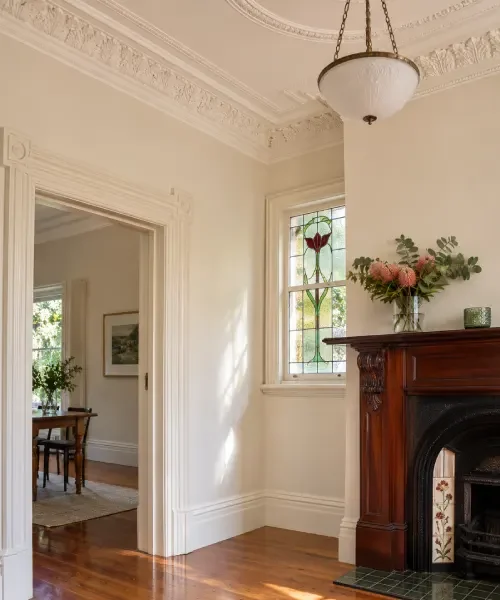
Period homes often include features that contribute strongly to their appearance, such as decorative cornices, timber architraves, skirting profiles, doors and other architectural details. Their shapes, current condition and existing finishes may influence the painting decisions. A broad approach suitable for plain walls may not address the different considerations surrounding these features.
Homeowners should identify which details they particularly want to retain and whether any surfaces should remain unpainted. Repainting existing decorative elements is a different task from repairing, recreating or restoring them. Where specialist conservation or reproduction is necessary, that requirement should be recognised separately from ordinary painting work.
Colour and Finish Choices for Older Homes
Choosing colours for an older home involves more than following a current decorating trend. Existing floors, timberwork, room proportions, natural light and architectural character can all influence how a proposed colour appears. Some owners prefer a restrained scheme that works with traditional details, while others want a carefully considered contemporary contrast.
Paint finish also matters. A surface’s condition and intended use influence which coating options may be appropriate. Before selecting a product, consider whether the existing material is suitable for repainting and whether the proposed finish will work with the home’s retained features. Colour preferences alone should not determine preparation or coating suitability.
Older Home Painting in Pakenham and Melbourne
Pakenham Premier Painters is based in Pakenham and has planned period and older home painting for suitable properties within its intended Melbourne service market. Property age, painting requirements, access and actual geographic availability should be considered when determining whether a particular enquiry falls within the service scope.
An older property does not need to have formal heritage status to require careful painting decisions. Homes with longstanding paintwork, distinctive architectural details or uncertain surface histories may benefit from discussing those conditions before requesting a price. Availability for an individual Melbourne location should be confirmed rather than assumed.
Understanding an Older Home Painting Quote
A useful quotation should make the proposed painting work understandable. For an older home, the areas included, surface conditions, preparation assumptions, coating selections and access requirements can influence the price. Decorative features and surfaces with uncertain histories may need to be considered separately from straightforward painted areas.
It is also important to understand what has not been assessed or included. For example, a painting quotation should not be assumed to cover hazardous-material removal, extensive substrate repairs or specialist heritage conservation. If further investigation reveals additional work, that scope may need to be discussed independently before painting proceeds.
Choosing Between Touch-Ups and Repainting
Not every older home needs all its painted surfaces renewed at the same time. Where the existing finish remains suitable, an owner may prefer to concentrate on particular rooms or visibly worn areas. However, matching an aged colour, sheen or texture can be difficult, and a small repair may remain noticeable beside older surrounding paint.
A broader repaint may be worth considering when coating deterioration extends across a larger area or when consistent appearance is important. The decision should account for the condition of adjoining surfaces, the owner’s priorities and any unresolved material concerns. Neither isolated touch-ups nor complete repainting should be treated as the automatic choice.
What To Share Before You Enquire
An older home painting enquiry is more useful when it includes a clear description of the property and the work being considered. Identify the rooms or exterior areas involved, explain what you would like to change and mention any decorative elements that should receive particular attention. Photographs can help communicate visible conditions where available.
Also mention known painting history, suspected hazardous coatings, moisture concerns, heritage restrictions and any access limitations. These details help establish whether the proposed work falls within ordinary painting scope or needs further assessment.
Older Home Painting: What To Check First
| What You Notice | Why It Matters | Next Step |
|---|---|---|
| Several Old Paint Layers | Existing coating condition and compatibility may be uncertain. | Share any known painting history before assessment. |
| Cracked or Flaking Paint | Underlying deterioration may affect repainting suitability. | Identify affected areas; avoid disturbing suspicious coatings. |
| Recurring Damp Marks | An unresolved moisture problem may need attention first. | Investigate the cause before deciding on repainting. |
| Original Decorative Features | Period details may influence the painting scope. | Identify features to retain or leave unpainted. |
| Suspected Lead or Asbestos | Hazardous materials may require specialist assessment. | Avoid disturbance and seek appropriate professional advice. |
| Heritage-Protected Property | Certain painting changes may require prior permission. | Check applicable heritage controls before proceeding. |
| Uneven Wear Between Rooms | Targeted repainting and broader work offer different outcomes. | List priority areas and desired finish consistency. |
Six Decisions Before Repainting an Older Home
A few early decisions can make the proposed painting scope easier to explain, compare and assess.
-
Touch-Up Visibility
A small touch-up may remain noticeable against aged paint because colour, sheen or texture can differ. Consider whether a localised repair or broader repaint better suits the result you want.
-
Different Surface Needs
Older homes can combine plaster, timber and previously repaired surfaces. Describe the areas involved so different conditions can be considered rather than assuming one preparation approach will suit every surface.
-
Colours in Context
Natural light, existing floors and retained timberwork can influence how new colours look. Compare colour and sheen choices with those features before settling on a finish for each space.
-
Painting Versus Restoration
Repainting existing surfaces is not the same as repairing damaged timber, replacing decorative elements or carrying out heritage conservation. Identify those needs separately so the requested work stays clearly defined.
-
Access Considerations
Mention access limitations around tall or awkward surfaces and delicate existing details. These conditions can affect how the proposed work is assessed and what should be included in the enquiry.
-
Understand the Quote
Check which rooms, surfaces, preparation assumptions and finishes a proposed quote covers. Unresolved substrate defects or specialist assessments should not be assumed included unless they are explicitly addressed.