
Office Painting Pakenham
Office painting refreshes the walls, ceilings and other agreed painted surfaces in workplaces. Whether an office is occupied or vacant, the work needs to suit the rooms, their condition and the way people use them.
Pakenham Premier Painters’ office painting offering is designed for business owners, tenants and property managers considering a workplace refresh in suitable Melbourne locations. Individual offices, meeting rooms and shared areas can have different requirements.
Before requesting a quote, identify the rooms involved, furniture and computer equipment, preferred colours and access limits. These details help define the painting work and the decisions that need to be made before it begins.

Why Choose Us for Office Painting?
Office projects involve more than choosing a colour. Pakenham Premier Painters recognises that painting decisions may involve a business owner, an office manager and a landlord, with different priorities for appearance, access and approval.
An enquiry can start with marked walls, tired finishes or rooms that no longer look consistent. Discussing surface condition and desired results helps distinguish straightforward painting from work needing further assessment.
Rather than assuming every workplace follows the same schedule, we encourage clear discussion of project boundaries and constraints. That helps you compare the proposed work with your office’s needs.
Office Painting Questions Answered
Plan your workplace refresh with answers about office access, painting scope, furnishings, finish choices and early quotation requirements.
Can Office Painting Work Around Staff?
It may be possible to plan painting around occupied rooms, but the approach depends on access, furniture, ventilation, work boundaries and the times the workplace can be made available. Explain staff movements and any rooms that must stay in use when enquiring. Arrangements that avoid normal working hours should not be assumed.
What Does an Office Painting Quote Cover?
An office painting quote should identify the rooms and surfaces to be painted, their condition, preparation needs, requested finishes, access arrangements and any exclusions. Share photos or a room list if available. The final scope and price depend on the individual project, so a single per-room price may not reflect the work required.
Who Moves Desks and Computer Equipment?
Responsibilities for relocating desks, disconnecting IT equipment and protecting sensitive items should be clarified before painting begins. These tasks are not automatically included in an office repaint. Tell Pakenham Premier Painters about fixed workstations, cables and storage areas so their effect on the proposed scope can be discussed.
Can You Paint Shared Office Areas?
Reception spaces, corridors and meeting rooms can be considered within an office painting enquiry. They may need different access arrangements from private offices because staff and visitors use them throughout the day. List these areas separately so their use, surfaces and required finish can be considered.
Is After-Hours Office Painting Available?
After-hours work must be discussed rather than assumed. Tell us when access is possible and which rooms must remain operational. Scheduling and availability would need to be checked for your individual office painting project before any arrangement is relied upon. Evening or weekend work cannot be promised without confirmation.
Which Paint Finish Suits Office Walls?
The appropriate office wall finish depends on the surface, lighting, desired appearance and how the room is used. Busy corridors and quieter offices may have different practical needs. Include your existing coating, cleaning expectations and finish preferences in the enquiry. Specific product performance and durability should be considered before a final selection.
Office Wall and Ceiling Painting
Office walls and ceilings do not always need the same treatment. Frequently used corridors may show marks and scuffs, while private offices might need attention because of uneven colours or ageing finishes. Ceiling condition, previously painted partitions and changes in natural lighting can also influence what should be included in the painting scope. Identifying each surface helps establish the work required.
Before repainting office walls, it is useful to check for loose coating, surface damage, visible cracks and areas requiring preparation. Some imperfections may need attention before painting, while more substantial defects can require separate assessment. The condition of the existing surfaces, rather than appearance alone, should guide discussions about preparation, coating suitability and the proposed finish.
Managing Desks, Computers and Workspace Access
Offices contain equipment and furniture that can make painting more complicated than working in an empty room. Fixed desks, monitors, network cables, cabinets and other workplace items may limit access to walls. Identifying these obstacles before arranging office interior painting helps determine which spaces can be made available and what preparation responsibilities need to be discussed.
It is important to establish who will relocate personal belongings, manage electronic equipment and provide access to restricted areas. Sensitive items should not be moved or disconnected without appropriate authorisation. Pakenham Premier Painters can be informed about these requirements during an enquiry so that equipment considerations are not overlooked when discussing the proposed painting work.

Project Enquiries
Contact Us

Address
84 Greendale Blvd, Pakenham VIC 3810, Australia
Call Us
0430 433 100
Reasons to Trust Us for Office Painting
Clear office painting decisions begin with an understandable scope, realistic access expectations and an opportunity to raise workplace-specific questions.
- A distinct offering for office painting enquiries
- Scoping guided by individual workplace requirements
- Consideration of both private and shared rooms
- Clear discussion before assuming preparation is included
- Honest boundaries around scheduling and work availability
- Transparent consideration of property access and permissions
- Pakenham business base without unsupported location claims
- An opportunity to clarify proposed scope exclusions


Contact Us
Discuss Your Office Painting
Office painting planning should identify the rooms and surfaces involved, whether the workplace will remain occupied, access arrangements and any business operating constraints.
Planning Office Painting From Enquiry to Handover
Planning an office painting project begins with identifying the rooms involved, the existing surfaces and the result you want. A useful enquiry describes whether the workplace is occupied, which areas need painting and any preferred timing. Surface condition, preparation requirements, access arrangements and finish preferences can then be considered when defining the proposed work.
Before painting starts, important matters to clarify include what is included in the quotation, which rooms will be available and who is responsible for preparing the workspace. Completion and handover expectations are also worth discussing, including when painted areas may be used again and how any concerns will be raised. Actual arrangements depend on the agreed project scope.
Painting Reception Areas, Meeting Rooms and Private Offices
Different parts of an office contribute to the experience of employees and visitors. Reception areas may be the first spaces people see, while meeting rooms need an appearance suited to discussions and presentations. Private offices, administrative rooms and shared workspaces can have their own requirements. A workplace painting project should consider how each room is used rather than assuming one approach suits every space.
For example, an office manager may want reception walls to match the business’s chosen colours while keeping meeting rooms more neutral. Another workplace may simply need consistent finishes throughout its rooms. These decisions can inform the selection of painted surfaces, colours and finishes without requiring unnecessary changes to areas that are already satisfactory.
Choosing Office Paint Colours and Finishes
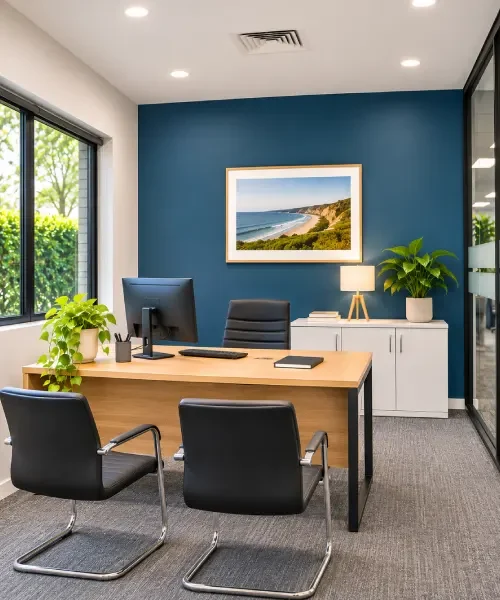
Office paint colours influence how a workplace looks and how its different rooms relate to one another. Existing flooring, furniture, lighting and business colour preferences can all affect the choice. A lighter finish may suit one setting, while a contrasting colour might help define a reception wall or meeting space. The appropriate choice depends on the intended appearance and existing surroundings.
Finish selection matters as much as colour. Frequently touched walls, meeting rooms and quieter work areas can have different cleaning and appearance requirements. When considering office wall painting, discuss whether a finish needs to be easy to maintain, whether existing coatings affect the selection and what level of sheen is preferred. Product suitability should be assessed for the actual surfaces rather than assumed.
Office Painting in Melbourne From Pakenham
Pakenham Premier Painters is based in Pakenham, Victoria, with office painting planned for suitable commercial properties across Melbourne. Business owners, tenants and property managers considering workplace painting can enquire about their location and project requirements. Actual service coverage depends on the property, the type of work and practical arrangements, rather than an assumption that every Melbourne address is automatically covered.
For Melbourne office painting enquiries, it helps to provide the property location, building type, room details and any access restrictions at the outset. Offices within larger commercial buildings may involve shared entrances, parking arrangements, lifts or designated access times. These details help establish whether the proposed work is suitable and what needs to be clarified before arrangements can be made.
Office Painting Permissions and Building Requirements
Painting an office can involve decisions beyond those made by the person requesting the work. A tenant may need permission from a landlord, while a building manager may control access to shared areas or work within the premises. Clarifying who can authorise the painting, approve colours and agree to access arrangements can help prevent misunderstandings before a project begins.
Where an office operates inside a shared commercial building, consider any building-specific requirements relevant to the proposed painting work. These might include access procedures, delivery arrangements, equipment movement or restrictions affecting particular areas. Relevant requirements should be established with the property manager or authorised decision-maker rather than assuming the painting contractor can independently approve changes to the premises.
Is an Occupied or Vacant Office Better to Paint?
An occupied office and a vacant office present different practical considerations. Where staff are working, access to individual rooms, shared facilities and essential equipment may be restricted. Painting may need to be considered in separate areas, depending on the workplace and what arrangements are practical. An occupied office does not automatically mean that all painting can proceed without affecting normal activities.
A vacant office may offer fewer obstacles from desks and daily staff movements, but it can still have important constraints. The property might have a scheduled handover, incoming occupants or building access requirements. Neither arrangement guarantees a particular completion time or cost. The better approach depends on surface condition, availability, project scope and the dates that can actually be agreed.
Preparing for an Office Painting Quote
Before requesting an office painting quote, prepare a clear description of the work you want considered. Identify the number and types of rooms, whether ceilings are included, the condition of existing paintwork and any particular finish preferences. Photographs can help illustrate marked surfaces, unusual access conditions or other details that may influence the proposed work.
It is also helpful to explain when the workplace can be accessed, whether staff will remain on site and who can approve the work. Mention any deadlines or changes in tenancy without assuming a specific completion date is available. With these details, Pakenham Premier Painters can better understand the enquiry and the information needed to discuss an appropriate office painting scope.
Office Painting: What to Confirm Before Quoting
| Office Situation | What to Check | Before Enquiring |
|---|---|---|
| Occupied Workspace | Staff access and essential room use | Identify rooms that must remain accessible |
| Vacant Office | Move-in dates and handover requirements | Share preferred dates; confirm scheduling separately |
| Leased Premises | Landlord permission and colour approval | Identify the authorised decision-maker |
| Shared Reception | Visitor movement and common-area access | Specify busy periods and access restrictions |
| Computer-Heavy Rooms | Fixed desks, cabling and sensitive equipment | Clarify responsibility for moving equipment |
| Mixed Surface Conditions | Damaged walls, ceilings and existing coatings | Identify surfaces needing further assessment |
| Selected Rooms Only | Exact boundaries of the proposed repaint | List included and excluded areas |
| Restricted Building Access | Entry permissions and available access windows | Provide relevant building management requirements |
Six Details Worth Deciding Before Office Painting
These practical considerations can help you make clearer decisions about your workplace’s appearance, finishes and everyday use.
-
Set Room Priorities
A reception wall may need to reflect the business identity, while meeting rooms and private offices may suit a quieter look. Decide what each area should achieve.
-
View Colours Together
Compare proposed wall colours with existing flooring, furniture and nearby painted surfaces. Consider how the room’s lighting changes their appearance before settling on a colour direction.
-
Consider Daily Cleaning
Walls in corridors and shared spaces may be touched more often than those in quiet offices. Discuss cleaning expectations, sheen and surface suitability when considering finishes.
-
Check Ceiling Consistency
Look for uneven ceiling colours, ageing finishes or visible differences near partitions. Decide whether these details belong in the refresh instead of assuming walls and ceilings need identical treatment.
-
Notice Fixed Obstructions
Identify wall areas behind fixed cabinets, desks or sensitive equipment. Knowing what must stay in place helps clarify accessible surfaces and where painted edges may remain visible.
-
Clarify Room Reuse
Before agreeing to the work, discuss when painted rooms may return to normal use and how final concerns will be raised. Do not assume immediate re-entry or fixed completion times.