
Cornice Installation & Repairs Pakenham
Cornice installation creates a defined finish where walls meet ceilings. Whether you need cornices fitted in a newly finished room or damaged sections repaired, the profile, alignment and joins all affect how the junction looks once decorated.
Homeowners, landlords and people renovating a property may need cornice work when sections are missing, cracked, loose or no longer match nearby lengths. The right approach depends on the existing material and the condition of the adjoining surfaces.
Based in Pakenham, Pakenham Premier Painters welcomes enquiries about suitable cornice installation and repair projects in Melbourne. Share what needs attention to discuss possible options and quotation requirements.
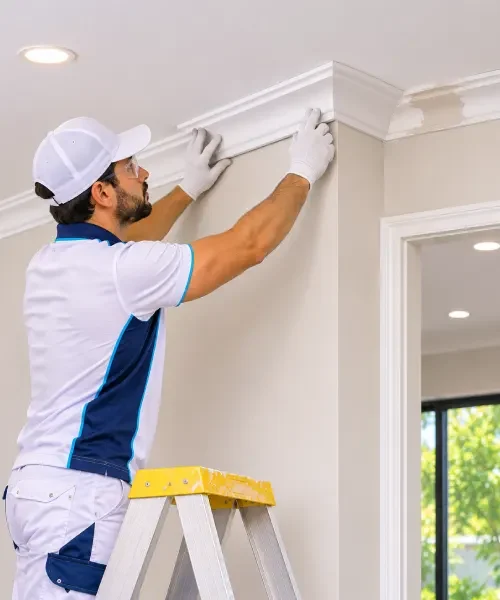

Why Choose Us for Cornice Installation & Repairs
Cornice work involves more than choosing a length of moulding. Existing profile depth, corner joints and the condition of fixing surfaces can all affect the options available.
For an existing room, Pakenham Premier Painters can discuss whether a local repair, replacement section or complete run makes sense. Matching an older profile may also affect what can be achieved.
Wall and ceiling finishes matter too. Where cornice joints need filling or sections need changing, adjoining surfaces may require attention before decorating. Raising these questions during an enquiry helps avoid assuming that every damaged cornice needs the same treatment.
Questions About Your Cornices
Understand common cornice problems, matching options, repair considerations and what to share before requesting installation or repair work.
Can You Match My Existing Cornice Profile?
A matching cornice may be available if its profile and dimensions can be identified, but an exact match is not always possible, particularly with older or discontinued shapes. A clear photo and approximate measurements can help explain what you have. Any proposed match should be checked before it is relied on.
When Should a Cracked Cornice Be Replaced?
A small surface crack or joint gap may be suitable for cornice repair, but a broken, extensively loose or damaged length might need partial or full replacement. The right choice depends on the condition of the cornice and adjoining surfaces. Repeated cracking may warrant checking for an underlying cause first.
What Causes Gaps Around Ceiling Cornices?
Gaps can appear around joints or where cornice meets a wall or ceiling. Causes vary, including movement or a loss of adhesion, so the appearance alone does not establish what needs fixing. Describe whether the gap is localised, widening or accompanied by loose sections when asking about cornice repairs.
Will Cornice Repairs Need Repainting Afterwards?
Repairing or replacing cornice sections may disturb nearby paint or leave filled joints that need preparation and painting for a consistent appearance. Whether only the repaired area or a larger adjoining section should be decorated depends on the existing finish and colour. Raise repainting during the enquiry so it is considered separately.
What Determines Cornice Installation and Repair Costs?
Cornice quotation factors include the number and length of runs, the profile, access, removal of damaged material, matching requirements and adjoining surface condition. Small areas are not necessarily straightforward if profiles are difficult to match or the fixing surfaces need attention. An accurate description and photos can help define a suitable quotation request.
Can Cornices Be Installed in Existing Rooms?
Yes, cornices can be considered for existing rooms as well as newly finished spaces. Existing paintwork, wall and ceiling condition, room dimensions and corner details influence the work involved. If there is already a cornice in part of the room, its shape and height should be considered before selecting an additional length.
New Cornice Installation for Unfinished Room Edges
When a room has no cornice, installing moulding along the wall-to-ceiling junction can create a defined border rather than leaving a plain meeting line. Before choosing a profile, consider the ceiling height, overall room style and how the moulding will meet at internal and external corners.
Installation details also depend on the wall and ceiling surfaces. Existing coatings, uneven junctions and the number of joins can affect preparation and how the finished run looks. Discuss these conditions before settling on the cornice type and extent of work.
Repairs for Cracked Cornice Joints and Gaps
A hairline crack at a join is different from a length that has separated from its fixing surface. Small blemishes may be suitable for local filling, while loose or broken sections can call for more extensive cornice repairs. The visible line alone does not confirm which approach is appropriate.
Check whether damage is confined to one joint, follows a longer run or returns after previous filling. These observations help distinguish an isolated finish issue from a problem that needs closer attention. Simply painting over a recurring gap may leave the reason for it unresolved.

Project Enquiries
Contact Us

Address
84 Greendale Blvd, Pakenham VIC 3810, Australia
Call Us
0430 433 100
Reasons To Consider Us for Cornice Work
Cornice work benefits from attention to the profile, its surroundings and the decisions that affect a practical, properly scoped enquiry.
- Relevant questions about corners and profile dimensions.
- Practical distinctions between loose fixings and cracks.
- Consideration of finish differences after partial replacement.
- Awareness of matching limits for existing mouldings.
- Attention to access before discussing suitable work.
- Separate consideration of potential underlying surface defects.
- Clear discussion of options without guaranteed outcomes.
- Local enquiries considered against actual service coverage.


Contact Us
Ask About Your Cornices
For cornice work, identify whether you need new installation, a local repair or replacement of an existing run, and note the profile, damage and adjoining finishes.
Preparing Existing Rooms for Cornice Work
If cornice work is planned in a furnished room, access along the wall edges and to the ceiling junction matters. Mention shelving, built-in cabinets, tall furniture or other obstacles that could make parts of the run difficult to reach. Not all sections of a room are equally accessible.
Nearby wallpaper, fresh paint and delicate finishes may also influence protection and repair boundaries. Existing damaged sections, old sealant or paint build-up can affect preparation. Identifying these conditions helps make the planned work clearer without assuming a particular removal, adhesive or finishing method will be used.
Cornice Work During Renovations and Property Updates
During renovations, cornices may need attention when walls are changed, ceiling edges are exposed or a room is finished in stages. Installing a new length alongside older moulding is different from completing a completely bare perimeter. The transition needs consideration before work is scoped.
Property owners and landlords may also need a damaged section dealt with while retaining the surrounding trim. Builders coordinating finishing work may need cornice requirements identified before decorative coatings are planned. Each situation calls for a description of the specific room and existing junction.
How Cornice Alignment Affects the Finished Look
Even when the underlying walls and ceiling are sound, misaligned cornice edges or uneven corner mitres can remain noticeable in the finished room. Profile depth and consistent positioning influence whether the trim appears balanced from one wall to the next.
Matching the visible line is especially relevant where a short section meets intact cornice. A repair can address physical damage without necessarily making old and new painted areas identical. Discuss the desired appearance and any visible differences before deciding how much finishing is appropriate.
Cornice Services for Pakenham and Melbourne Properties
Pakenham Premier Painters is based in Pakenham, with cornice installation and repairs planned for suitable properties in Melbourne. Whether a particular address is within practical coverage should be confirmed rather than assuming every suburb or project is included.
Local enquiries may involve a single damaged corner, an unfinished room or several lengths requiring assessment. What matters for a useful discussion is the address and nature of the cornice work, not simply the postcode. Share both when asking about suitability for a particular property.
What Repeated Cornice Damage Can Indicate
Where cornice cracks recur, staining appears or adjacent ceiling material seems loose, the visible cornice damage may not be the only issue. Water ingress, movement or damaged supporting surfaces cannot be diagnosed accurately from a brief description alone.
A cosmetic cornice repair does not correct an active leak, structural defect or other cause outside the repair scope. If the surrounding wall or ceiling appears unstable or moisture affected, the underlying concern may need suitable assessment and resolution before cornice finishing is considered.
Choosing a Suitable Cornice Replacement Length
When only part of a cornice run is damaged, replacing the smallest possible length can seem appealing. However, a short replacement creates joints with the existing trim, and any difference in profile or dimensions may be more apparent after decorating.
Where an exact profile cannot be sourced, options may include choosing a similar moulding or considering a longer replacement run. Neither choice should be assumed suitable without understanding the room and the customer’s preferences. Compare the likely visual transition with the extent of work before choosing.
What to Include in a Cornice Quote Request
Useful information for a cornice installation or repair quotation includes the property’s location, whether work involves new lengths or existing damage, and approximately how much of the room is affected. Photos showing the full run and a close view of any cracks or corners can help explain the request.
Also mention access difficulties, known water or movement concerns, existing profile dimensions where available, and whether adjoining painting may be wanted. These details can help define the enquiry, although material suitability, actual service coverage, quoted scope and timing still need to be established before work is agreed.
Cornice Problems and Possible Next Steps
| Visible Condition | What to Check | Possible Approach |
|---|---|---|
| Hairline Joint Crack | Whether the crack has returned after filling | Local repair may be suitable |
| Loose Cornice Length | Separation from the fixing surface | Assess fixing condition; replacement may be needed |
| Broken Corner | Damage to adjoining joins and edges | Consider local repair or section replacement |
| Missing Cornice Section | Existing profile shape and dimensions | Check matching availability before selecting replacement |
| Unfinished Ceiling Junction | Room perimeter, corners and adjoining surfaces | Consider installation of a new cornice run |
| Widening Edge Gap | Possible movement or loss of adhesion | Investigate the cause before cosmetic repair |
| Water Staining | Whether the moisture issue remains active | Address underlying issues before cornice finishing |
Before Requesting Cornice Installation or Repairs
A few room-specific details can make your enquiry clearer without assuming a particular repair method.
-
01
Photograph the Full Run
Take one photo showing the full wall-to-ceiling junction and another showing the damaged joint or corner close up. This helps explain how a small defect relates to the surrounding cornice.
-
02
Check the Existing Profile
For rooms with existing cornices, share an approximate profile width and a clear photo of the moulding shape. Older or discontinued profiles may not have an exact replacement match.
-
03
Identify the Work Area
Identify whether the work concerns one corner, several lengths or an entire room perimeter. Include rough measurements if available so the enquiry describes the likely extent of work.
-
04
Mention Access Obstacles
Mention tall cupboards, built-in shelving, furniture or other obstacles along the ceiling edge. Access can vary between walls, even within the same room, and may affect the practical scope.
-
05
Describe Previous Repairs
Point out old filler, sealant, heavy paint build-up or sections that have needed attention before. These details can help distinguish existing surface treatments from the cornice condition underneath.
-
06
Clarify Finishing Expectations
Explain whether you want only the affected section addressed or would also like adjoining paintwork considered. New material and filled joints can look different beside older finishes.